
Liberty County 72-Hour Feed Status
The Sheriff's jail page offers an inmate-search link, but its current navigation does not identify a 72-hour, three-day, weekend, recent-release, or historical list. The linked Tyler portal could not be validated during research beyond an access or login state. Its exact fields, refresh cycle, booking-photo display, and retention are unknown. It is unsafe to treat that current-custody doorway as a rolling release archive.
A three-day period is still useful as a records-request range. It can cover an event that occurred before a family began checking, span a weekend, or reconcile dates that belong to different steps. A court order time, bond posting time, VINE event time, transport time, and jail processing time can differ. Label each event by its source instead of forcing them into a single timestamp.
Build a Liberty Three-Day Check
Use a fixed start and end date and identify the booking as closely as possible. The Sheriff's existing custody record is the central source. VINE can provide an event signal, while the court docket explains legal authority. A receiving-agency record may show that confinement continued after the county booking ended.
- Open the official Liberty County Jail page and note the current search result without interpreting absence as release.
- Search Texas VINELink for the correct Liberty agency record. Preserve the exact custody wording.
- Contact LCSO Records and request existing release or custody records for the named person and three-day date range.
- Check the appropriate Liberty court docket for the filed bond order, dismissal, judgment, remand, or other disposition.
- Follow any transfer destination to TDCJ, another county, BOP, USMS, or ICE as the facts require.
For an event confined to today, Jail Releases: 24 Hours narrows the date range. A narrow request can reduce ambiguity, but it cannot replace the custodian's record.
Preserve the exact three-day interval in the request, including the local start and end times. Ask for electronic copies of existing booking-release or custody-log entries within that range. LCSO does not have to create a special weekend report, and the responsive material may carry a different title. Include the booking or PID number when known so a common name does not pull an unrelated record.
After receiving a record, reconcile every listed destination. A transfer to TDCJ should lead to the state current-incarceration search and later TDCJ history. A move to another county belongs with that county's custodian. Federal or immigration follow-up is appropriate only when the release record, case, or detainer facts point there. This source-led sequence keeps a three-day check from turning every roster disappearance into the same conclusion.
Liberty Release Details to Request
The Public Information Act concerns records that already exist. It does not force LCSO to assemble a new three-day list. Ask for a booking sheet, release log, custody history, or transfer record and describe the desired fields. The Sheriff's Records Division may apply legal exceptions or explain that a specific item is absent.
| Detail | Use in a 72-hour check |
|---|---|
| Full booking identity | Prevents confusion among people with similar names. |
| Booking or PID number | Links the request to the specific Liberty jail event. |
| Release date and time | Separates the physical custody event from a prior court entry. |
| Authority or release type | May identify bond, time served, dismissal, or another basis. |
| Destination | Distinguishes community release from continued custody. |
A court judgment may award jail credit or time served. That supports what the court ordered, but processing might not be immediate and another hold may exist. Likewise, a docketed bond event does not prove the exact moment a person walked out of the jail.
Why Liberty Roster Loss Is Ambiguous
The Sheriff's Tyler link is labeled for inmate search, not released-person history. Direct research access did not expose a validated public 72-hour view. The source capture shows the access condition encountered during review.
See the official Tyler PublicAccess endpoint.
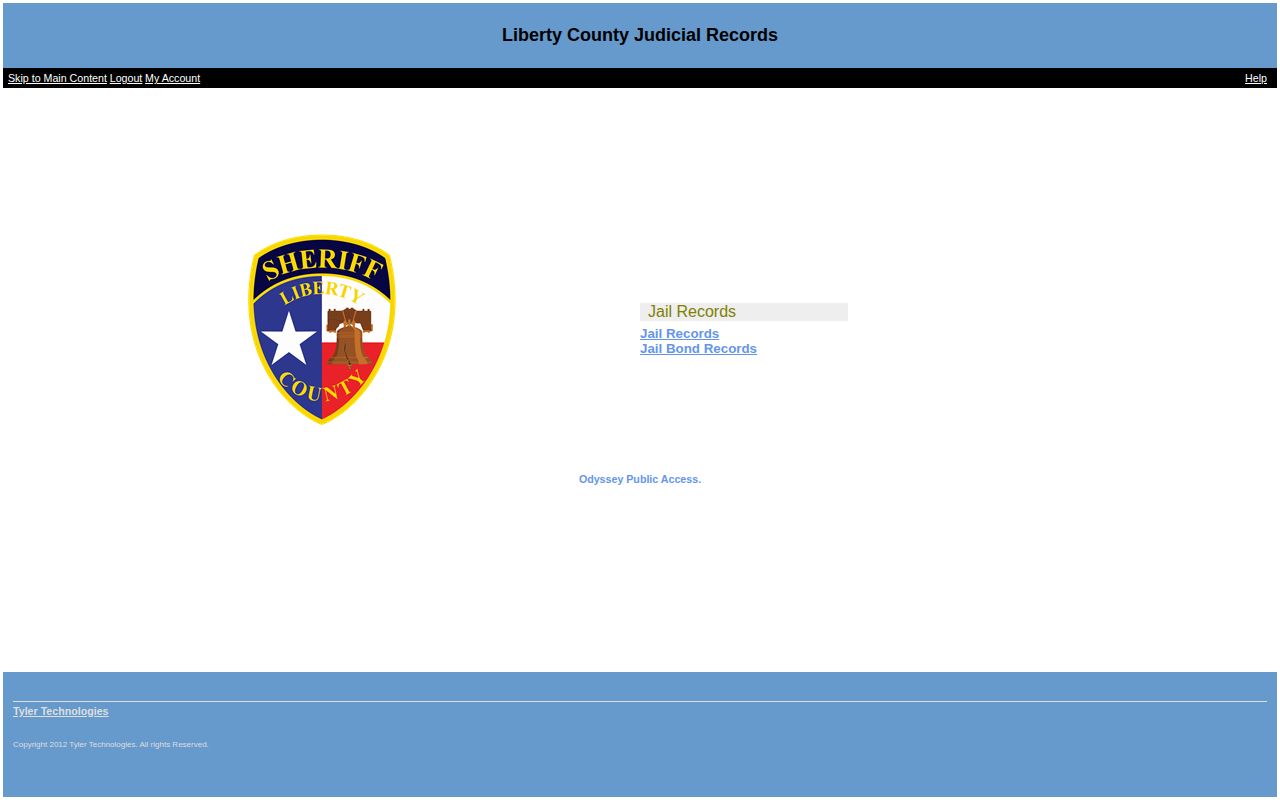
This image documents why no columns, photos, cadence, or archive are promised. It is not a release result for any person.
If a name vanishes between checks, confirm spelling and identity first. Then look for an agency-reported VINE event and ask LCSO for the county release record. A release from Liberty County Jail only means that booking ended. It does not establish freedom from all custody or the outcome of every charge.
Weekend Liberty Release Timing
No official source reviewed publishes routine jail release-processing times, weekend or holiday practices, a physical exit point, a waiting zone, or rideshare rules. Those gaps must remain explicit. A three-day search should not assign a standard schedule borrowed from another Texas county.
Weekend checking also raises a source-timing problem. A magistrate or court event, bond paperwork, a VINE signal, and the completed jail departure may appear at different times. None should be silently substituted for another. Call Liberty County Jail for current logistics, and request the completed custody record once it exists.
A person may also stay in custody because another case, warrant, or detainer remains. The absence of a public three-day feed makes the destination field especially valuable. It can redirect the search to another county, TDCJ, or a federal agency rather than ending the inquiry too early.
Note: A weekend date range improves coverage, but it does not cure missing or delayed source data.
Liberty VINE and Court Corroboration
Texas VINELink is directly linked by the Liberty County Sheriff's Office, making it a local county-custody channel. Select the correct agency record and compare identifiers. If VINE reports released or out of custody, describe that as agency-reported custody status. Do not invent a date field that the result does not show, and do not assume that no other authority holds the person.
The court record explains the case event that may underlie a release. Liberty's court access is divided by case type. Enterprise Justice excludes justice-of-the-peace cases, and some document images require clerk contact. A dismissal ends the identified charge but does not prove immediate release or clear every hold. A bond entry shows a bond event, not the physical exit time.
| Source | Question answered |
|---|---|
| Current inmate portal | Does the interface return the identity now? |
| Texas VINELink | Did a participating agency report a custody event? |
| LCSO release record | When and why did the county booking end, and where next? |
| Liberty court record | What order or disposition appears in the identified case? |
Liberty County Custody Handoffs
Four TDCJ institutions operate inside Liberty County, yet their records are state records. Oliver J. Bell Unit is a pre-release facility. Dempsie Henley Unit includes treatment and intermediate-sanction roles. L.V. Hightower and Lucile Plane also use state release, discharge, and transfer processes. A person leaving one of those units will not appear in a county jail 72-hour list.
Use TDCJ current incarceration information for a current state prisoner, then request historical incarceration or release information when the person no longer appears. Board review or a favorable parole decision is not physical-release confirmation. State-prison notification events now belong in TDCJ IVSS, while county-jail custody events use VINE.
- Release
- The named custody event ended under the recorded authority.
- Transfer
- Another custodian assumed control; this is not release to the community.
- Parole
- Conditional release from prison under Parole Division supervision.
- Discharge
- The sentence or supervision ended, rather than merely changing location.
Federal and Immigration Follow-Up
No current federal prison or ICE detention facility in Liberty County was established in the official sources reviewed. Federal and immigration searches remain factual fallbacks when the county destination record points that way. The BOP locator can show “RELEASED” with a past federal release date, which means the person is no longer in BOP custody. It does not rule out state, local, ICE, or supervised-release consequences.
An ICE detainer can turn a local “release” into a custody transfer. ICE may request notice and up to 48 additional hours so it can assume custody. ICE's locator includes current detainees and certain releases within 60 days, but an absent result has several explanations. Start with the LCSO destination record, then use the federal channel tied to the documented handoff.
The final conclusion should stay narrow and sourced. A three-day review can establish the end of a Liberty booking without claiming a final case result or permanent freedom from detention.
Public Record Search
Sponsored Results